
The last few years have been an interesting time for muscle building research with the deep dive into Range of Motion - ROM for short. The findings have been very promising with studies going from looking at chronic stretching preventing atrophy(1) to a systematic review discussing many aspects of ROM including comparing effects on lower body vs upper body musculature.(2)
Wilson et al looked at whether stretching could prevent atrophy of unused muscles by putting subjects into a control group, immobilization group, and immobilization plus stretching. They found that the immobilization group resulted in more muscle loss than the immobilized plus stretching group.(1) This is good evidence for prevention of muscle loss but possible evidence for hypertrophy as well.
Warneke et al did a good job of looking at the effect of stretching on hypertrophy using three separate groups. The first group stretched the plantar flexors (calves) continuously for one hour per day using a boot that locks the calf in a stretched position. The second group performed hypertrophy training for the plantar flexors (5 sets of 10-12 reps three days per week), and the control group did nothing for their calves. To quote the punchline of the study - "Results show that for the calf muscle, the use of long-lasting stretching interventions can be deemed an alternative to conventional resistance training if the aim is to increase maximal voluntary contraction, muscle thickness and flexibility." Seems very promising that stretching alone can produce hypertrophic results but the cost is one hour every day of extreme (and probably pretty painful) stretching inside of a locked boot. Not very appealing compared to the quick workout done 3 times per week.(3) Still, this is growing evidence that a muscle being worked while under tension at its most lengthened point has potential to be very hypertrophic. The big question is how hypertrophic would it actually be?
After seeing the potential for hypertrophy from stretching alone the next logical step is to compare what happens when a muscle is worked in a position that is more stretched vs less stretched. A great study compared Seated Leg Curls and Lying Leg Curls where each participant did each exercise with only one of their legs. So the left leg was always one exercise and the right leg the other. The Seated Leg Curl lengthens the hamstring more throughout the ROM compared to Lying Leg Curls. That extra stretch resulted in subjects experiencing a 14% increase in muscle size with the Seated Leg Curls compared to the 9% increase in Lying Leg Curls.(4) The fantastic part about this study was that each leg belonged to the same person. The comparison gets extra validity because this means every other variable was as controlled as it could possibly be. One group accidentally eating more protein, one group being more generally active or any other potential difference from person to person becomes a non-factor when it's the same person comparing both test variables.
The data for stretch mediated hypertrophy on the lower body has been pretty well established with multiple studies using Leg Extensions at varying ranges of motion as well as the Leg Curl study discussed above. But can the same conclusions be made for the upper body musculature? Logically it would be safe to assume that yes, this would be the case. Let's take a look at the research.
In a similar vein to the Seated Leg Curl vs Lying Leg Curl study where the same person used one leg for each lift there is a very similar study looking at the triceps. This study was done by the same head researcher Sumiaki Maeo with mostly the same group and examined participants doing triceps extensions where one arm did them overhead and the other did them in a neutral position that was essentially the same as a standing cable pushdown. The overhead position grew the triceps as a whole 1.4x more than the neutral position giving further solidification to stretch mediated hypertrophy.(5)
I tried to find some studies that looked at the chest and back but didn't come up with anything. This doesn't mean they don't exist or that stretch mediated hypertrophy is not applicable to them, it only means I did not find them. It's possible they don't exist as a meta analysis by Kassiano et al examined full ROM vs partial ROM at the beginning, middle and end stages of exercises for the rectus femoris, vastus lateralis, biceps brachii, distal site of the brachialis, gluteus maximus, adductors, and triceps. Below is a table that summarizes their findings.
| Optimal growth with full ROM | Optimal growth with partial ROM in beginning of reps (Muscle being worked at its most stretched) | Optimal growth with partial ROM in the middle of reps |
|---|---|---|
| Rectus femoris (middle quad) Vastus Lateralis (outer quad) Biceps Brachialis Gluteus Maximus Adductors |
Rectus femoris (middle quad) Vastus Lateralis (outer quad) Biceps Brachialis Proximal portion of rectus femoris |
Triceps |
If a muscle is listed twice it means they were very similar in benefit. Note that not one of them experienced greater muscle growth with the end of the rep.
The simple conclusion made was that "the use of [partial] ROM in the initial part of the excursion in combination with [full] ROM training should be considered when prescribing hypertrophy-oriented resistance training programs.(6)
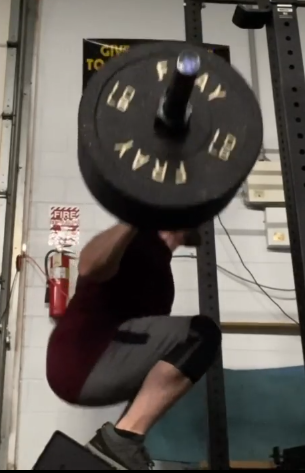
The implementation of these findings to improve training is to utilize full range of motion and if for some reason full ROM isn't used then partials at the most stretched position of an exercise would be the goal. Get those squats as deep as anatomy safely allows. Use Dumbbells instead of Barbells for benching so the weight's path can go "through" the torso. When doing back exercises let your arms go as far forward as possible before beginning the pull back. There are many options for each bodypart and exercise and many ways to utilize the stretch on a rep by rep basis. There are even machines that are now made where you can alter which part of the ROM is emphasized. Prime makes many of these that allow you to selectively load the end, middle or beginning of the motion preferentially. When this option is available two options are to load it in a 3:2:1 ratio of the beginning stretch, middle and then the shortened end portion of the rep. Second option would be a 2:1:0 ratio. Find what feels good as some people don't like the imbalance of too much being skewed to one portion.
So we've taken a good look at the research for range of motion now. What can we say qualifies as an overall good rep? It would need to satisfy a few criteria. Chief of which is range of motion and based on all that's been discussed already a complete range at that. Tension would need to be present throughout the rep with no bounce to give undue momentum to the lift. The targeted muscle should be stretched as much as possible at the bottom in a safe position. That would mean a controlled eccentric with a forceful concentric that begins from the most stretched position safely possible. A slight pause would be great and could possibly reduce the risk of injury but is not strictly necessary. A possible schematic would be to take 1-4 seconds to lower the weight to a point that maximally stretches the target muscle safely, pausing for half a second before completing the rep in a more explosive but controlled 0.5-2 seconds. Following those guidelines should lean to very effective individual reps. All that is left is to fit these into the program as a whole.
When deciding on exercise programming there are options for intensity techniques in addition to generally using as complete a range of motion as possible. Chief of these techniques are lengthened partials. These mean that reps are done only in the lengthened portion of each rep. To put numbers on it, though it can vary from person to person or exercise to exercise, a good rule of thumb would be to only work the stretched 30-50% of the rep. Lengthened Partials can be done after a set reaches failure as a way to push beyond RPE 10 for that set or as a planned progression. The planned progression would be where the partials are done once RPE 7 is hit so that instead of having 3 more reps and failing an additional 6 or more reps can be done as partials and therefore increasing the total amount of reps completed. The final way these can be done would be to just have sets of purely lengthened partials. The set consisting of entirely lengthened partials should probably be higher rep to ensure that the muscle is being utilized for a significant length of time. Try to equate it to the time a normal set would take so if a normal set ends at 10 reps then the lengthened partial only set should probably be in the realm of 15-25 depending on rep cadence and percentage of the normal ROM being used.
Unsure on how to best use this information for your own training?
The amount of nuance when it comes to training, nutrition and progress are immense so if you're having any difficulties feel free to reach out. In depth consultations are available on the site or quick questions can use the contact tab or instagram to send a message.
1. Wilson SJ, Christensen B, Gange K, Todden C, Hatterman-Valenti H, Albrecht JM. Chronic Stretching During 2 Weeks of Immobilization Decreases Loss of Girth, Peak Torque, and Dorsiflexion Range of Motion. J Sport Rehabil. 2019 Jan 1;28(1):67-71. doi: 10.1123/jsr.2017-0101. PMID: 28952869.
2. Schoenfeld BJ, Grgic J. Effects of range of motion on muscle development during resistance training interventions: A systematic review. SAGE Open Med. 2020 Jan 21;8:2050312120901559. doi: 10.1177/2050312120901559. PMID: 32030125; PMCID: PMC6977096.
3. Warneke K, Wirth K, Keiner M, Lohmann LH, Hillebrecht M, Brinkmann A, Wohlann T, Schiemann S. Comparison of the effects of long-lasting static stretching and hypertrophy training on maximal strength, muscle thickness and flexibility in the plantar flexors. Eur J Appl Physiol. 2023 Aug;123(8):1773-1787. doi: 10.1007/s00421-023-05184-6. Epub 2023 Apr 8. PMID: 37029826; PMCID: PMC10363083.
4. Maeo S, Huang M, Wu Y, Sakurai H, Kusagawa Y, Sugiyama T, Kanehisa H, Isaka T. Greater Hamstrings Muscle Hypertrophy but Similar Damage Protection after Training at Long versus Short Muscle Lengths. Med Sci Sports Exerc. 2021 Apr 1;53(4):825-837. doi: 10.1249/MSS.0000000000002523. PMID: 33009197; PMCID: PMC7969179.
5. Sumiaki Maeo, Yuhang Wu, Meng Huang, Hikaru Sakurai, Yuki Kusagawa, Takashi Sugiyama, Hiroaki Kanehisa & Tadao Isaka (2023) Triceps brachii hypertrophy is substantially greater after elbow extension training performed in the overhead versus neutral arm position, European Journal of Sport Science, 23:7, 1240-1250, DOI: 10.1080/17461391.2022.2100279
6. Kassiano, Witalo; Costa, Bruna; Nunes, João Pedro; Ribeiro, Alex S.; Schoenfeld, Brad J.; Cyrino, Edilson S. Which ROMs Lead to Rome? A Systematic Review of the Effects of Range of Motion on Muscle Hypertrophy. Journal of Strength and Conditioning Research 37(5):p 1135-1144, May 2023. | DOI: 10.1519/JSC.0000000000004415